


Blog
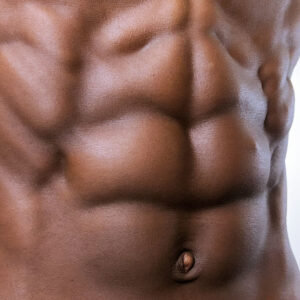
A six-pack may not protect you from back pain

For years, people with persistent lower back pain have been told some version of the same thing: strengthen your core.
The logic seems obvious. Strong abdominal muscles help support the trunk, so stronger abs should mean a stronger, healthier back. And if someone develops back pain, perhaps weak abdominal muscles are partly to blame.
But fascinating new research suggests the story isn’t nearly that simple.
A large 2026 study using artificial intelligence to analyse thousands of CT scans found that people diagnosed with low back pain did not have significantly less abdominal muscle than comparable people without back pain.
So, although strengthening and exercise remain important parts of managing back pain, simply having bigger abdominal muscles may not provide the protection many people assume.
AI takes a much closer look at muscle and back pain
The research, published in PLOS Digital Health, used a deep-learning system to analyse CT images and measure abdominal muscle, visceral fat and subcutaneous fat.
This allowed the researchers to investigate the issue on a scale that would previously have been extremely difficult.
They initially examined data from 10,835 people to establish patterns in body composition associated with age and BMI. They then compared 2,622 people diagnosed with low back pain with 2,577 people without the diagnosis, matched for age, sex and BMI.
If the conventional assumption were correct, you might expect the people suffering from back pain to have noticeably smaller abdominal muscles.
They didn’t.
The average muscle cross-sectional measurements were extremely similar: 45.9 cm²/m² in the low-back-pain group versus 46.2 cm²/m² in the control group, a difference that was not statistically significant.
In other words, just looking at the amount of abdominal muscle couldn’t reliably distinguish the people with back pain from those without it.
But the researchers did find something interesting
Although the quantity of muscle was similar, its relationship to body fat was different.
People with low back pain had a lower ratio of abdominal muscle to total abdominal fat: 0.353 compared with 0.376 in the control group. The difference was statistically significant, although the researchers emphasised that its size was relatively small.
That distinction matters.
It suggests we may need to stop thinking about the back in simplistic terms such as strong abdominal muscles = healthy back and instead consider the broader relationship between muscle, body composition, movement and spinal function.
Does this mean core exercises don’t work?
No.
And that’s an important distinction.
The study did not investigate whether strengthening exercises reduce back pain, nor does it demonstrate that abdominal or trunk exercise is ineffective. Instead, it challenges a different assumption: that people with low back pain necessarily have less abdominal muscle.
Those are two very different questions.
Exercise can potentially help people with back pain through numerous mechanisms besides simply making muscles bigger. It can improve coordination, confidence in movement, physical capacity and tolerance of everyday activity.
Indeed, wider research into low-back-pain treatment continues to support active, non-surgical approaches. A 2026 systematic review in PLOS Medicine, for example, found that many guideline-recommended non-pharmacological interventions were cost-effective, including exercise-based and self-management approaches.
Back pain is more complicated than “weak core muscles”
That’s perhaps the most useful message to come from the new study.
Low back pain isn’t a single disease with a single cause. Two people can experience very similar pain despite having very different spines, lifestyles, levels of fitness and underlying contributing factors.
And there is increasing evidence that persistent back pain shouldn’t be viewed purely as a problem of muscle strength or structural damage.
Another striking 2026 study found that movement-provoked pain in people with chronic low back pain activated the brain’s default mode network, a network associated with memories, self-reflection and our sense of self. This response differed from that produced by experimentally induced acute pain.
Meanwhile, separate research has examined everything from the microscopic arrangement of collagen within spinal discs to genetic and cellular processes involved in disc ageing.
The emerging picture is therefore much richer than the old idea of a “weak back.”
So should you still strengthen your core?
For many people, yes, but perhaps for a different reason than you think.
The goal shouldn’t necessarily be to develop the biggest or strongest abdominal muscles possible.
A sensible exercise programme aims to help you move comfortably, progressively restore capacity and confidence, and improve the body’s ability to cope with the physical demands you actually place upon it.
Having visible abdominal muscles certainly doesn’t guarantee that you won’t experience back pain.
And not having a six-pack doesn’t mean that your back is weak.
The researchers themselves noted that their results do not mean muscle is irrelevant. Instead, they suggest that future research may need to look more closely at specific muscles and more sophisticated measures of body composition, rather than treating total abdominal muscle mass as the important factor.
That is a subtle distinction, but an important one.
Perhaps the question we should be asking people with back pain is no longer simply:
“How strong is your core?”
but:
“How well does your body move, adapt and cope with the demands you place upon it?”
And that could lead to a much more useful conversation about back pain.
Sources:
- Low back pain patients carry similar abdominal muscle mass to others, study finds, Medical Xpress / PLOS Digital Health, 19 November 2026. Read the article [medicalxpress.com]
- Cost-effectiveness of recommended interventions for managing low back pain: A systematic review, PLOS Medicine, 27 October 2026. Read the study [journals.plos.org]
- Scientists discover why chronic back pain feels so personal, ScienceDaily / UC San Diego research, 29 October 2026. Read the article [sciencedaily.com]
- Little-known protein may help protect spinal disks from aging, Medical Xpress / University of Utah, 19 November 2026. Read the article [medicalxpress.com]
- Tiny structures in our spines could hold clues to why our backs wear out, Medical Xpress / University of Manchester, 4 November 2026. Read the article [medicalxpress.com]
Health Disclaimer
Important Health Notice: The information on this website is for general educational purposes only and is not medical advice. It is not intended to diagnose, treat, cure, or prevent any condition, and it is not a substitute for advice from a qualified healthcare professional.
Products sold by Bad Backs are intended for general comfort, support, and ergonomic use. Individual needs differ, and what suits one person may not suit another. Before starting any new product, exercise, or routine, especially if you have an existing injury, medical condition, or persistent pain, consult your doctor, physiotherapist, or other qualified healthcare practitioner.
If you experience severe, worsening, or persistent pain, seek professional medical care promptly. This content is accurate as of the date of publication and may not reflect current guidance.

Jonathan Hulme


Radiofrequency ablation for back pain: does it really work?

 24/7 Office Chairs
 Control Room Chairs
 24/7 Task Chairs
 Ergonomic Office Chairs
 Budget Office Chairs
 Standard Office Chairs
 Premium Office Chairs
 Drafting Chairs
 Heavy Duty & Bariatric Chairs
 Small / Petite Chairs
 Executive Chairs
 Boardroom Chairs
 Executive Chairs – Budget
 Executive Chairs – Premium
 Herman Miller Chairs
 Gaming Chairs
 Hospitality & Cafe Chairs & Stools
 Bar & Cafe Chairs
 Bar Stools
 Production, Lab & Cleanroom Seating
 Lab & Cleanroom Chairs
 Lab & Cleanroom Stools
 ESD Chairs & Stools
 Production Chairs & Stools
 Kids Chairs
 Kneeling Chairs
 Meeting & Conference Room Chairs
 Saddle Chairs
 Saddle Seats With Backs
 Saddle Seats Without Backs
 Saddle Chair Accessories – Bambachs
 Sit Stand & Active Seating
 Active Perching Stools
 Static Perching Stools
 Active Chairs
 Visitor & Waiting Room Chairs
 Sled Base Chairs
 4 Leg Chairs
 Plush & Upholstered Chairs
 Clearance
 Cabinets and Storage
 Book Shelves / Hutches
 Credenzas / Side Tables
 Cupboards
 Drawers / Pedestals
 Desk Accessories
 Anti Fatigue / Active Mats
 Desk Cable Trays / Cable Management
 CPU Holders
 Desk Power Modules and Accessories
 Desk Privacy Screens & Modesty Boards
 Cafe / Hospitality Tables
 Tables for Sitting
 Tables for Standing
 Table Bases
 Kids Desks
 Mobile Carts & Workstations
 Health Care / Hospital Carts
 Home & Office Mobile Units
 Office Acoustic Management
 Office Meeting Booths
 Desks & Tables – Fixed Height
 Rectangle Office Desks & Returns
 Corner Desks & Workstation Pods
 Meeting & Conference Room Tables
 Coffee Tables
 Reception Counters / Areas
 Reception / Admin Counters
 Reception Lounge Seating
 Reception Chairs / Ottomans
 Recliners
 Recliners / Sofas
 Recliners – Zero Gravity
 Massage Chairs & Tables
 Sit Stand Desk Units – Place on existing Desk
 Electric – ‘Place’ On Desk Units
 Manual – ‘Place’ on Desk Units
 Sit Stand Desks – Electric
 Corner (Three Leg) Electric Desks
 Rectangle (Two Leg) Electric Desks
 Sit Stand Desks – Manual
 Single Column Manual Desks
 Rectangle (Two Leg) Manual Desks
 Corner (3 Leg) Manual Desk
 Sit Stand Desk Frames
 Electric Corner (3 Leg) Desk Frames
 Electric Rectangle (2 Leg) Desk Frames
 Table Tops
 Corner Desk Tops
 Rectangle Desk & Table Tops
 Round Cafe, Office & Meeting Room Tops
 Clearance
 Air Cooling and Purification
 Bags & Backpacks
 Desk Lamps
 Document Holders
 Ergonomic Mouse / Mice
 Bluetooth Mouse
 Left Hand / Ambitextrous Mouse
 Roller Bar Mouse
 Track Ball Mouse
 Traditional Style Mouse
 Vertical Mouse
 Ergonomic Keyboards
 Bluetooth Keyboards
 Compact Keyboards
 Full Size Keyboards
 Number Pads
 Split Keyboards
 Floor and Anti Fatigue Mats
 Active Standing Boards
 Anti Fatigue Mats
 Chair Mats
 Foot Rests
 High Rise Foot Rests
 Leg Rests
 Rocking Footrest – Height Adjustable
 Rocking Footrests – No Height Adjustment
 Static Footrests – Height Adjustable
 Static Footrests – No Height Adjustment
 Headsets
 Keyboard Trays
 Monitor, Laptop Risers & Stands
 Laptop Stands
 Monitor Risers
 Tablet – Ipad – Phone Stands
 Monitor Arms
 Single Monitor Arms
 Dual Monitor Arms
 Arms For Three Or More Screens
 Wall Mount Monitor Arms
 Monitor Arm Accessories
 Wrist & Forearm Supports
 Forearm Supports
 Wrist Pads / Mouse Pads
 Clearance
 Pillows
 Sleeping Pillows
 CPAP / Specialty Pillows
 Travel Pillows
 Mattresses
 Mattresses – Hybrid Premium
 Mattresses – Memory Foam Premium
 Mattresses – Home Care Pressure Relieving – Air
 Mattresses – Home Care Pressure Relieving – Foam
 Electric Adjustable Bed Bases
 Two Motor Electric Adjustable Base
 Three and Four Motor Electric Adjustable Base
 Home Care Hi-Lo and Lo-Lo Adjustable Base
 Bed Wedges
 Bedroom Furniture & Accessories
 Bed Mobility / Safety
 Headboards and Surrounds
 Body Pillows / Bed Lounges
 Bolsters / Bed Lumbar Supports
 Leg Wedges / Knee Supports
 Mattress Protectors & Sheets
 Bed Sheets
 Mattress Protectors
 Mattress Toppers
 Specialty Support Pillows
 Clearance
 Braces – Arm
 Forearm & Elbow Braces
 Hand & Wrist Braces
 Braces – Back
 Lower Back / Lumbar Braces
 Pelvic / Sacroilliac Belts
 Thoracic / Posture Braces
 Braces – Leg
 Ankle Braces
 Knee Braces
 Braces – Neck & Shoulder
 Neck Supports
 Shoulder Supports
 Cushions – Lumbar and Back
 Inflatable & Self Inflating Supports
 Lumbar Supports – High Back Premium
 Lumbar Supports – Medium Back
 Smaller Supports and Half Rolls
 Cushions – Sitting
 Active Seat Cushions
 Coccyx Cut Out Cushions
 Donut Seat Cushions
 Inflatable & Self Inflating Seat Cushions
 Swivel Cushions
 Wedge Seat Cushions
 Bathroom Safety
 Bathtup Safety
 Grab Rails
 Bath / Shower Seating
 Toilet Seats & Rails
 Bedroom Safety
 Healthcare Beds
 Mattresses – Pressure Relieving
 Healthcare Furniture
 Lift Chairs
 Pressure Care
 Reaching Aids
 Vehicle & Travel Products
 Outdoors
 Vehicle Aids
 Wheelchairs and Scooters
 Manual Wheelchairs
 Electric Wheelchairs
 Mobility Scooters
 Wheelchair Cushions
 Rollators
 Rollators – 3 Wheel
 Rollators – 4 wheel
 Rollators – Forearm & Knee
 Standing Assistance
 Walking Frames
 Walking Sticks
 Crutches
 Creams & Gels
 Compression Therapy
 Exercise Products
 Balance / Stability / Cooordination
 Exercise Mats
 Training Balls
 Resistance Bands
 Hot & Cold Therapy
 Inversion & Traction
 Inversion / Traction Devices
 Lumbar / Thoracic Stretching
 Neck / Cervical Traction
 Massage Chairs
 Massage Tables
 Massagers / Massage Tools
 Foot Massagers
 Electric Massagers
 Trigger Point / Massage Tools
 Tens & Ems Machines
 Clearance
 Body Cooling Products
 Healthcare Workstations
 Ladders and Safety Equipment
 Safety Stools / Steps
 Manual Handling Equipment
 Lifting & Handling Equipment
 Trolleys and Carts
 Medical Equipment
